
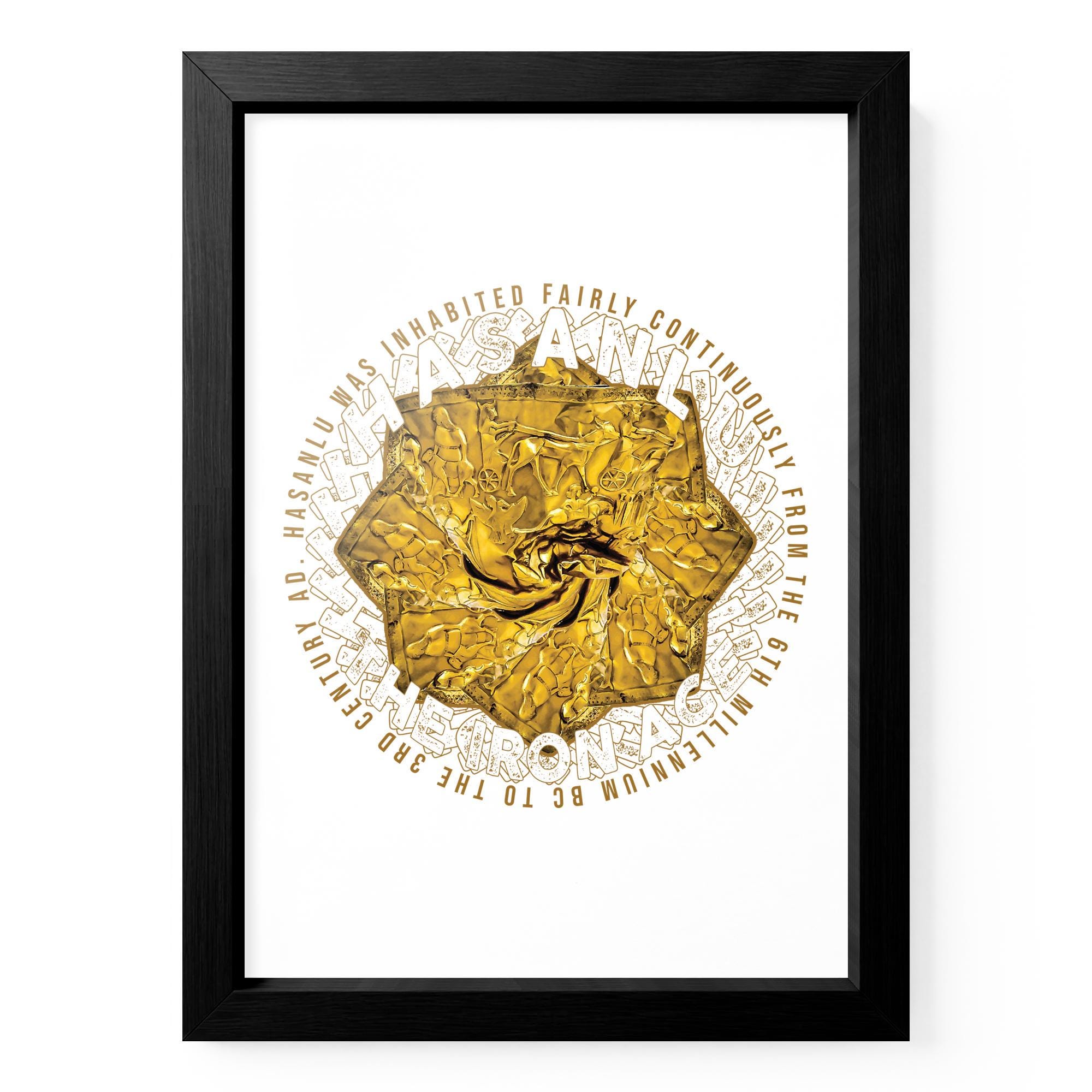
Wear history. Keep the Story Alive. An ARCHEOFASHION design inspired by one of the most remarkable archaeological discoveries of ancient Iran. A Masterpiece from 3,000 Years Ago The Golden Cup of Hasanlu is one of the most remarkable surviving artifacts from ancient Iran. It was discovered in 1958 during excavations led by American archaeologist Robert H. Dyson Jr. at Hasanlu Tepe, near the city of Naqadeh in northwestern Iran. Dating to the Iron Age, around the beginning of the first millennium BCE, the cup is generally associated with the artistic traditions of the region and the cultural world of ancient northwestern Iran, including the kingdom of Manna. Approximately 21 cm tall, with a rim diameter of around 18 cm and a weight of about 950 grams, this extraordinary gold vessel is far more than a precious object. Its intricate repoussé imagery preserves a visual world of divine beings, heroic combat and mythological narratives. A Story Engraved in Gold The cup's elaborate reliefs depict a fascinating sequence of figures and scenes, including divine beings associated with cosmic forces, a hero confronting a monster, and a goddess standing upon two rams. Some interpretations connect elements of this imagery with mythological traditions known from the ancient Near East, although the precise identities of the figures and the meaning of the scenes remain subjects of scholarly discussion. Every detail invites us to look closer. These are not merely decorative patterns; they offer glimpses into the beliefs, artistic imagination and cultural connections of people who lived thousands of years ago.
• Poster size: 14.8 x 21 cm
• Fine art print in gallery quality
• 250 g/m² paper with matte finish
• Real wood frame with deep profile in black, white, or natural
• Art glass pane, back with hanger and rotating closures
• With stand - for standing or hanging
• Delivered framed
• Outer dimensions with frame: max. 17.2 x 23.4 cm
• Frame profile: 22 mm deep, 12 mm wide
Note: The actual dimensions of the posters may vary by a few millimeters due to production. The outer dimensions of the frame are larger than the specified poster size.